
Apr . 01, 2024 17:55 Back to list
pressure gauges for water Performance Analysis
Introduction
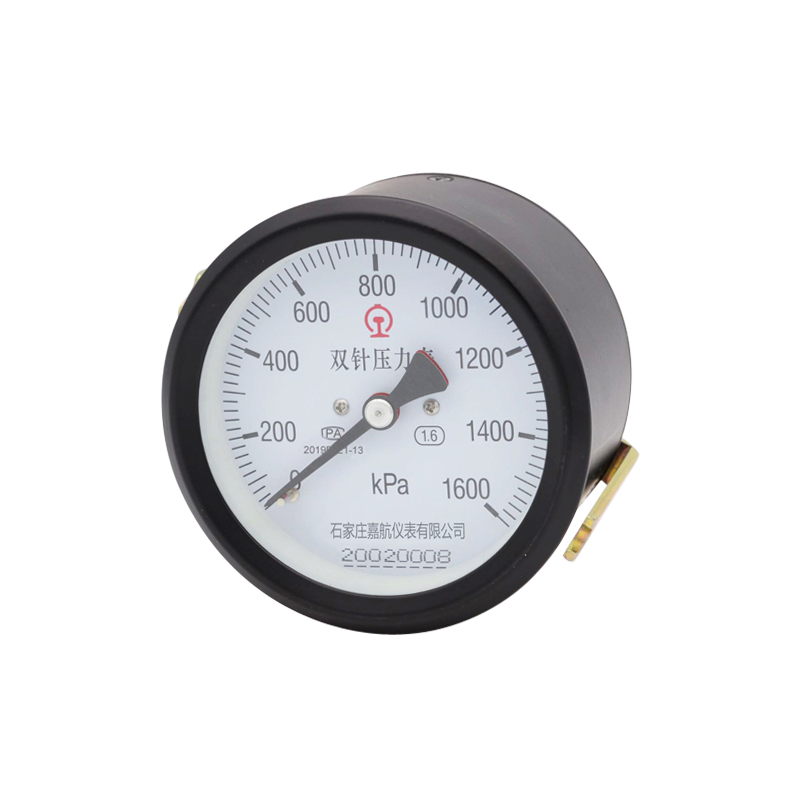
Pressure gauges for water systems are critical instrumentation components used to measure and display fluid pressure within pipelines, tanks, and various process applications. They represent a foundational element in water distribution networks, wastewater treatment facilities, irrigation systems, and industrial water processes. Their technical position in the industry chain is primarily as a final control and monitoring device, reliant on accurate sensor technology and robust mechanical or electronic transmission of pressure readings. Core performance characteristics revolve around accuracy, repeatability, reliability under varying environmental conditions, and compatibility with the water medium – encompassing both potable and non-potable water sources. The industry faces ongoing pressure to improve gauge lifespan, reduce maintenance costs, and enhance data integration capabilities for predictive maintenance and process optimization. A major pain point lies in mitigating corrosion caused by specific water chemistries and ensuring long-term accuracy despite cyclical pressure fluctuations and potential water hammer events.
Material Science & Manufacturing
The construction of pressure gauges for water applications relies on a combination of materials selected for their corrosion resistance, mechanical strength, and compatibility with water. Bourdon tubes, the core sensing element in many mechanical gauges, are commonly manufactured from alloys like beryllium copper, phosphor bronze, or stainless steel (316L or higher grades). Beryllium copper offers excellent elasticity and fatigue resistance but requires careful handling due to toxicity. Phosphor bronze provides good corrosion resistance and is a cost-effective alternative. Stainless steel is preferred for aggressive water chemistries and offers superior durability. Gauge cases are typically constructed from materials like aluminum, stainless steel, or engineered plastics like polycarbonate. The dial face is often made of durable plastic or glass with UV protection. Manufacturing processes include cold forming and drawing for Bourdon tube production, followed by heat treatment to achieve desired mechanical properties. Welding (TIG or laser welding) is utilized for connecting components, requiring strict quality control to prevent leaks. Electronic pressure transducers utilize piezoresistive or capacitive sensors fabricated using silicon or ceramic substrates. Micro-electro-mechanical systems (MEMS) technology is increasingly employed for miniaturization and enhanced performance. Critical parameters during manufacturing include precise dimensional control of the Bourdon tube, accurate calibration procedures, and rigorous testing to ensure leak tightness and pressure accuracy across the specified range. Quality control focuses on detecting flaws in the Bourdon tube, ensuring proper movement linkage, and verifying the accuracy of the dial and pointer assembly.
Performance & Engineering
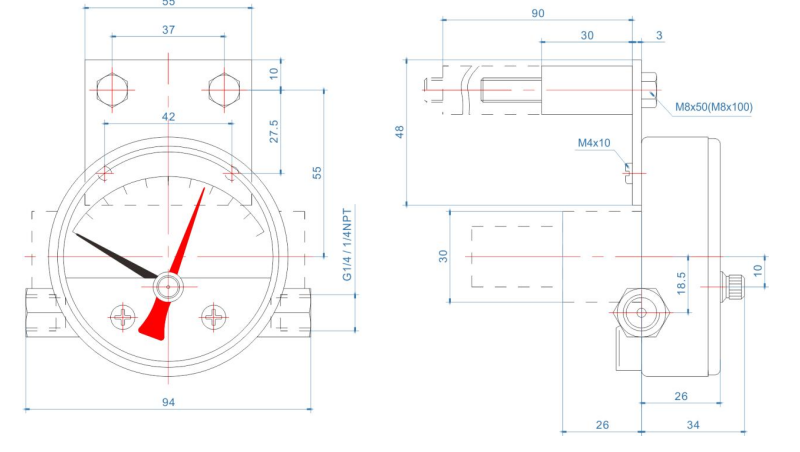
The performance of pressure gauges is fundamentally governed by principles of statics and material mechanics. The Bourdon tube, when subjected to internal pressure, undergoes a controlled deflection proportional to the applied force. This deflection is mechanically linked to a pointer that indicates pressure on a calibrated dial. Engineering considerations involve careful selection of tube dimensions (diameter, wall thickness, and curvature) to achieve the desired pressure range and accuracy. Force analysis is crucial for determining stress distribution within the Bourdon tube and ensuring it operates within its elastic limit to prevent permanent deformation. Environmental resistance is paramount, particularly in outdoor applications. Gauges must withstand temperature fluctuations, humidity, and potential exposure to corrosive elements. Ingress protection (IP) ratings (e.g., IP65, IP67) define the level of protection against dust and water. Compliance requirements vary depending on the application. For potable water systems, gauges must comply with NSF/ANSI 61 standards for materials in contact with drinking water. In industrial applications, standards like ASME B40.100 specify accuracy and testing procedures. For applications involving hazardous fluids, gauges may need to meet ATEX or IECEx requirements for explosion protection. Functional implementation often involves incorporating features like dampening mechanisms to mitigate the effects of pressure pulsations and overload protection to prevent damage from excessive pressure spikes. Glycerin filling is frequently used to lubricate moving parts, reduce wear, and dampen vibrations, improving gauge lifespan and readability.
Technical Specifications
| Pressure Range (psi) | Accuracy (±% of Full Scale) | Connection Size (NPT) | Operating Temperature (°F) |
|---|---|---|---|
| 0-30 | 1.0 | 1/8” | -40 to 176 |
| 0-100 | 0.5 | 1/4” | -40 to 176 |
| 0-300 | 0.5 | 1/2” | -40 to 176 |
| 0-500 | 1.0 | 1/2” | -40 to 176 |
| 0-1000 | 1.5 | 3/4” | -40 to 176 |
| 0-2000 | 2.0 | 1” | -40 to 176 |
Failure Mode & Maintenance
Pressure gauges, despite their robust design, are susceptible to various failure modes. Fatigue cracking of the Bourdon tube is a common issue, particularly with gauges subjected to frequent pressure cycling. Corrosion, especially in aggressive water environments (high chloride content or low pH), can lead to pitting corrosion and eventual tube failure. Delamination of the dial face or glass can occur due to UV exposure or mechanical impact. Degradation of the internal lubricant (glycerin or silicone oil) can increase friction and reduce accuracy. Oxidation of metallic components can also contribute to corrosion and reduced performance. Overpressure events, exceeding the gauge’s rated capacity, can cause permanent deformation or rupture. Maintenance solutions include regular visual inspection for leaks, corrosion, or damage to the dial face. Periodic calibration (typically annually) is essential to ensure accuracy. Replacement of the gauge is recommended if significant corrosion is observed or if calibration adjustments exceed acceptable limits. For gauges used in harsh environments, protective enclosures can mitigate the effects of temperature extremes and corrosive elements. Preventative maintenance should include flushing the gauge with clean water to remove sediment buildup and ensuring proper venting to prevent pressure trapping. Selecting a gauge material compatible with the specific water chemistry is crucial for maximizing lifespan. Consider using gauges with a liquid-filled case to dampen vibrations and reduce wear.
Industry FAQ
Q: What is the difference between a liquid-filled and a dry pressure gauge, and which is best for a water application?
A: Liquid-filled gauges (typically glycerin or silicone oil) offer superior vibration damping, extending the gauge's lifespan and improving readability in environments with pressure pulsations. They also lubricate internal components, reducing wear. Dry gauges are more suitable for clean, stable pressure applications. For most water applications, particularly those with pumps or variable flow rates, a liquid-filled gauge is highly recommended due to the inherent pressure fluctuations.
Q: How does water hammer affect pressure gauge accuracy and longevity?
A: Water hammer, a surge in pressure caused by sudden changes in flow, can significantly impact gauge accuracy and shorten its lifespan. The sudden shock can cause the Bourdon tube to undergo excessive stress, leading to fatigue cracking or permanent deformation. Dampening mechanisms within liquid-filled gauges help mitigate the effects of water hammer, but it’s also crucial to implement surge protection devices in the system to minimize pressure spikes.
Q: What material should I select for a pressure gauge used in a seawater application?
A: Seawater is highly corrosive due to its high chloride content. For seawater applications, a pressure gauge constructed with a 316L stainless steel Bourdon tube, stainless steel case, and a corrosion-resistant connection fitting is essential. Consider gauges with a protective coating or encapsulation to further enhance corrosion resistance. Regular inspection and maintenance are crucial in this environment.
Q: What is the importance of gauge calibration, and how often should it be performed?
A: Gauge calibration ensures the accuracy of pressure readings. Over time, gauges can drift due to wear, temperature fluctuations, or mechanical stress. Regular calibration (typically annually, or more frequently in critical applications) verifies the gauge’s accuracy against a traceable standard. Calibration is essential for maintaining process control and preventing costly errors.
Q: What is the meaning of IP67 rating for pressure gauges, and why is it important in water applications?
A: IP67 indicates that the pressure gauge is dust-tight and can withstand immersion in water up to 1 meter for 30 minutes. This rating is important in water applications where the gauge may be exposed to splashes, spray, or temporary submersion. It protects the internal components from damage and ensures reliable operation.
Conclusion
Pressure gauges remain indispensable components in water systems, providing critical feedback for monitoring and controlling fluid pressure. Their performance is deeply rooted in material science, precise manufacturing, and adherence to stringent engineering principles. Selecting the appropriate gauge material, considering environmental factors, and implementing a regular maintenance schedule are vital for ensuring long-term accuracy and reliability. The ongoing trend towards smart pressure gauges with digital displays and wireless communication capabilities offers opportunities for enhanced data acquisition and predictive maintenance, further optimizing water system performance.
Future developments will likely focus on increasing sensor durability, reducing gauge size through MEMS technology, and integrating advanced analytics for real-time pressure monitoring and anomaly detection. Continued research into corrosion-resistant materials and coatings will further extend gauge lifespan in challenging water environments. The adoption of Industry 4.0 principles will drive the integration of pressure gauges into comprehensive industrial control systems, enabling greater efficiency and process optimization.
 English
  Arabic
  China
China  China (Taiwan)
  Danish
  Dutch
Dutch  French
  German
  Greek
Greek  Hindi
Hindi  Indonesian
  Italian
  Japanese
  Korean
  Latin
Latin  Polish
  Portuguese
  Russian
  Spanish
  Turkish