
Apr . 01, 2024 17:55 Back to list
Pressure Transducers absolute pressure vs gauge pressure Performance Analysis
Introduction
Absolute pressure and gauge pressure represent fundamental methods of quantifying pressure, critical in a vast array of industrial applications. Absolute pressure is defined as pressure relative to a perfect vacuum – zero pressure. This makes it the true pressure exerted by a fluid. Gauge pressure, conversely, is measured relative to the ambient atmospheric pressure. Understanding the distinction is paramount, as incorrect application can lead to inaccurate measurements, system malfunctions, and safety hazards. This guide provides a comprehensive technical overview of absolute and gauge pressure, encompassing their underlying principles, manufacturing considerations for pressure transducers, performance characteristics, common failure modes, and relevant industry standards. The core pain point within industries relying on pressure control stems from a misunderstanding of these pressure types, especially when dealing with varying altitudes, dynamic atmospheric conditions, and stringent process requirements in sectors such as oil & gas, aerospace, and chemical processing.
Material Science & Manufacturing
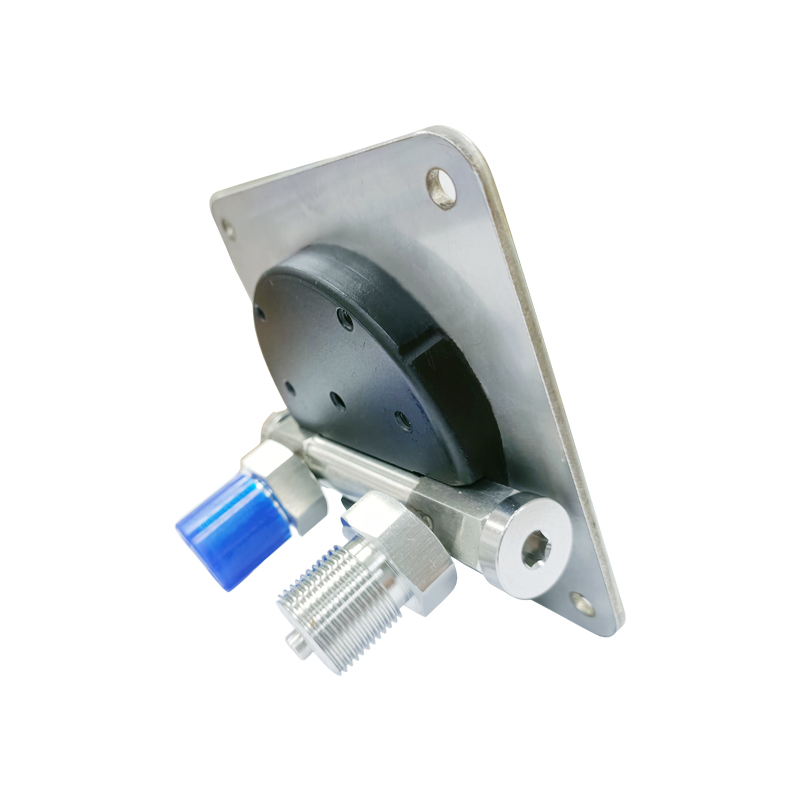
The manufacturing of pressure transducers, the instruments used to measure pressure, heavily relies on material science principles. Diaphragms, the pressure-sensing element, are commonly fabricated from stainless steel alloys (316L, 17-4 PH) for corrosion resistance and elasticity. Silicon, due to its piezoresistive properties, is also frequently used in microelectromechanical systems (MEMS) pressure sensors. The choice of material dictates the sensor’s compatibility with the measured media and its operating temperature range. Manufacturing processes include deep reactive-ion etching (DRIE) for silicon diaphragms and precision machining/welding for metallic diaphragms. Parameter control is critical: uniform diaphragm thickness (±1 μm) is essential for accurate readings, and welding must be performed under controlled atmospheric conditions (e.g., argon shielding) to prevent oxidation and ensure structural integrity. For sensors operating in corrosive environments, protective coatings like titanium nitride (TiN) or parylene are applied via chemical vapor deposition (CVD) or physical vapor deposition (PVD). The manufacturing of the pressure port, often threaded, requires precise machining to ensure a leak-tight seal. The thermal expansion coefficients of the diaphragm material and the housing material must be carefully matched to minimize drift with temperature fluctuations.
Performance & Engineering
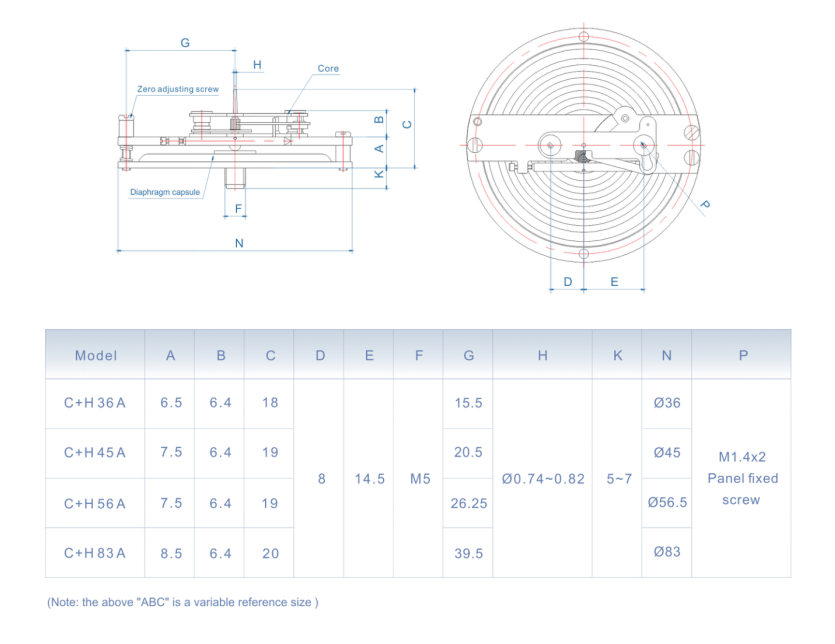
Performance analysis centers around understanding the relationship between applied pressure and the transducer’s output signal. Force analysis involves calculating the stress and strain on the diaphragm under pressure, which directly influences the output voltage (for piezoresistive sensors) or capacitance (for capacitive sensors). Environmental resistance is a crucial consideration, particularly in harsh industrial settings. Sensors must withstand temperature extremes, vibration, shock, and exposure to corrosive fluids. Compliance requirements, such as those outlined in IEC 61000-6-2 for electromagnetic compatibility (EMC), must be met. The linearity of the sensor’s output is a key performance metric, typically expressed as a percentage of full-scale output (%FSO). Hysteresis, the difference in output for increasing and decreasing pressure, must be minimized. Accuracy is affected by factors such as thermal drift, non-linearity, and zero offset. In applications requiring high precision, temperature compensation techniques are employed, utilizing thermistors or integrated circuits to correct for temperature-induced errors. Furthermore, the response time of the sensor, often characterized by its settling time, is critical in dynamic pressure measurement scenarios.
Technical Specifications
| Parameter | Absolute Pressure Transducer | Gauge Pressure Transducer | Typical Applications |
|---|---|---|---|
| Pressure Reference | Perfect Vacuum (0 psia) | Atmospheric Pressure (psia) | Altitude Measurement, Barometric Pressure Monitoring |
| Pressure Range | 0-100 psia, 0-500 psia, etc. | 0-50 psig, 0-100 psig, etc. | Hydraulic Systems, Pneumatic Control |
| Accuracy | ±0.25% FSO | ±0.25% FSO | Process Control, Industrial Automation |
| Operating Temperature | -40°C to +85°C | -40°C to +85°C | Outdoor Installations, Extreme Environments |
| Media Compatibility | Stainless Steel, Hastelloy | Stainless Steel, Brass | Corrosive Fluids, Gases |
| Output Signal | 4-20mA, 0-5V, Digital (I2C, SPI) | 4-20mA, 0-5V, Digital (I2C, SPI) | Data Acquisition Systems, PLCs |
Failure Mode & Maintenance
Common failure modes in pressure transducers include diaphragm rupture due to overpressure, drift in output signal due to material fatigue or contamination, and signal loss due to wiring issues or component failure. Fatigue cracking can occur in metallic diaphragms subjected to cyclical pressure fluctuations, especially at stress concentration points. Delamination of protective coatings can expose the underlying diaphragm material to corrosion. Oxidation of electrical contacts can increase resistance and lead to signal degradation. Maintenance typically involves periodic calibration to ensure accuracy, inspection for leaks or physical damage, and cleaning to remove contaminants. For sensors exposed to corrosive media, regular replacement of the diaphragm may be necessary. Failure analysis should include visual inspection, electrical testing (output signal, resistance), and potentially metallographic analysis to identify the root cause of failure. Preventative maintenance programs should incorporate regular sensor checks and calibration schedules based on the application’s severity and environmental conditions. Applying appropriate ingress protection (IP) ratings based on the environment will also minimize failures.
Industry FAQ
Q: What is the impact of altitude on gauge pressure measurements?
A: Gauge pressure is referenced to atmospheric pressure, which decreases with altitude. Therefore, a gauge pressure reading will be different at sea level versus a high-altitude location. For accurate pressure measurements independent of altitude, absolute pressure should be used, as it is referenced to a true vacuum.
Q: Can I directly substitute a gauge pressure transducer with an absolute pressure transducer in an existing system?
A: No, a direct substitution is generally not possible without recalibrating the system. The output signal from an absolute pressure transducer will be different from that of a gauge pressure transducer for the same applied pressure, requiring adjustments to the control logic and display settings.
Q: What are the advantages of using MEMS-based pressure sensors?
A: MEMS pressure sensors offer several advantages, including small size, low cost, high sensitivity, and low power consumption. They are well-suited for high-volume applications and can be easily integrated into complex systems.
Q: How does temperature affect the accuracy of pressure transducers?
A: Temperature variations can cause drift in the sensor’s output signal due to changes in the material properties of the diaphragm and the electronics. Temperature compensation techniques are employed to minimize this effect.
Q: What is the role of a snubber in a pressure measurement system?
A: A snubber is a device used to dampen pressure pulsations and spikes, protecting the pressure transducer from damage and improving the accuracy of the measurement. It’s crucial in applications with rapidly fluctuating pressures, like those found in hydraulic systems.
Conclusion
The distinction between absolute and gauge pressure is fundamental to accurate pressure measurement and control. While gauge pressure offers convenience by referencing ambient conditions, absolute pressure provides a true, independent measure of pressure, crucial for applications demanding precision and consistency regardless of environmental fluctuations. The selection of the appropriate transducer depends heavily on the specific application requirements, considering factors such as pressure range, media compatibility, environmental conditions, and accuracy needs.
Future advancements in pressure sensing technology will likely focus on developing more robust, miniature, and intelligent sensors capable of self-calibration and remote diagnostics. Integration with wireless communication protocols and data analytics will further enhance the capabilities of pressure measurement systems, enabling predictive maintenance and optimized process control. Understanding these core principles and emerging technologies is vital for engineers and procurement professionals alike.
 English
  Arabic
  China
China  China (Taiwan)
  Danish
  Dutch
Dutch  French
  German
  Greek
Greek  Hindi
Hindi  Indonesian
  Italian
  Japanese
  Korean
  Latin
Latin  Polish
  Portuguese
  Russian
  Spanish
  Turkish