
Apr . 01, 2024 17:55 Back to list
tire pressure gauge digital Performance Analysis
Introduction
Digital tire pressure gauges are precision instruments used to measure the air pressure within pneumatic tires. Positioned within the automotive aftermarket and maintenance sectors, they represent a critical component in vehicle safety and tire longevity. Unlike traditional mechanical gauges, digital variants employ pressure sensors and analog-to-digital converters to provide a numerical readout, eliminating parallax errors inherent in analog needle readings. Core performance characteristics include accuracy (typically ±0.5 PSI), resolution (0.1 PSI increments), measurement range (0-150 PSI commonly), and operational temperature range. A significant industry pain point is maintaining calibration accuracy over time, as drift impacts reliability. Furthermore, robustness against impact and environmental factors is paramount for professional automotive technicians and fleet management.
Material Science & Manufacturing
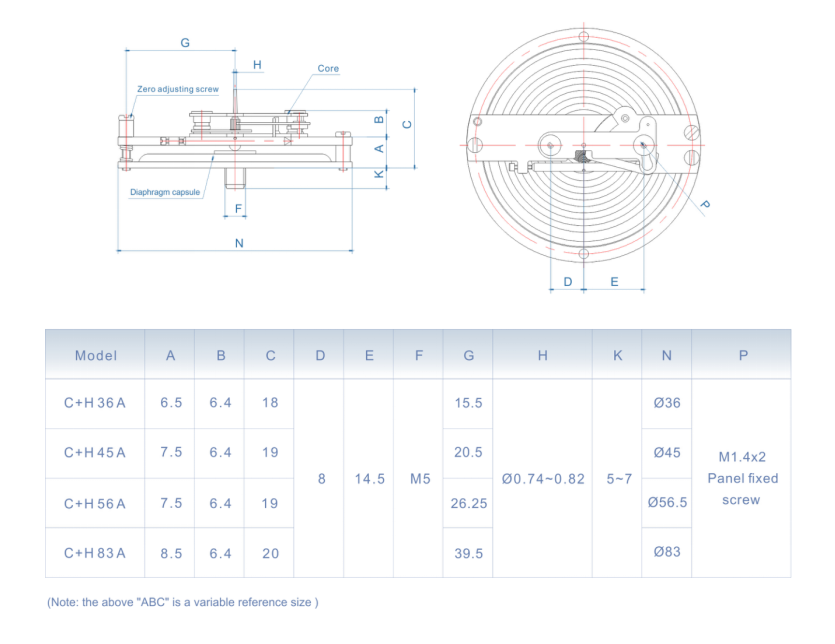
The construction of a digital tire pressure gauge typically involves several materials. The gauge housing is often comprised of ABS plastic, polypropylene, or aluminum alloy. ABS provides good impact resistance at a lower cost, while aluminum offers increased durability and a premium feel. The pressure sensor itself is usually a piezoresistive silicon sensor, chosen for its high sensitivity and linearity. Stainless steel is frequently used for the pressure port and internal components exposed to air to prevent corrosion. The LCD screen utilizes liquid crystal display technology, with polarizing films and backlighting components. Manufacturing involves several processes. Sensor fabrication relies on micro-electro-mechanical systems (MEMS) technology, requiring precise etching and doping of silicon wafers. Plastic housings are commonly produced via injection molding, where parameter control – specifically mold temperature, injection pressure, and cooling rate – is crucial to prevent warping and ensure dimensional accuracy. Circuit board assembly involves surface-mount technology (SMT) for component placement and soldering. Calibration is a critical step, typically performed using a NIST-traceable pressure standard and automated calibration equipment to ensure accuracy across the specified range. Battery installation, quality control testing, and final packaging complete the process.
Performance & Engineering
The performance of a digital tire pressure gauge is fundamentally governed by the principles of fluid mechanics and sensor transduction. Force analysis focuses on the pressure exerted by the air on the sensor diaphragm, which is directly proportional to the tire pressure. This force causes strain in the piezoresistive elements within the silicon sensor, altering its electrical resistance. The change in resistance is measured by a Wheatstone bridge circuit and converted to a digital signal. Environmental resistance is critical. Operating temperature range significantly influences sensor accuracy; silicon sensors exhibit temperature-dependent drift. Humidity can also affect performance, particularly if moisture ingress occurs, leading to corrosion of electrical contacts. Compliance requirements, such as those outlined by the National Highway Traffic Safety Administration (NHTSA) and SAE International, dictate minimum accuracy standards and durability testing procedures. Functional implementation involves signal conditioning circuitry to amplify and filter the sensor signal, a microcontroller to process the data and drive the LCD, and a power supply (typically a button cell battery). Engineering design considerations include minimizing sensor hysteresis, optimizing signal-to-noise ratio, and ensuring electromagnetic compatibility (EMC) to prevent interference.
Technical Specifications
| Accuracy | Resolution | Pressure Range | Operating Temperature |
|---|---|---|---|
| ±0.5 PSI (or ±0.034 bar) | 0.1 PSI (or 0.007 bar) | 2 - 150 PSI (14 - 1034 kPa) | -10°C to 60°C (14°F to 140°F) |
| ±1% of reading | 0.01 bar | 0 - 200 PSI (0 - 1379 kPa) | 0°C to 50°C (32°F to 122°F) |
| ±0.3% Full Scale | 0.05 PSI | 5 - 160 PSI (34 - 1103 kPa) | -20°C to 70°C (-4°F to 158°F) |
| ±0.5% of Span | 0.1 kPa | 0 - 1000 kPa (0 - 145 PSI) | -10°C to 60°C (14°F to 140°F) |
| ±0.2% FS | 0.01 bar | 0 - 25 bar (0 - 363 PSI) | -5°C to 65°C (23°F to 149°F) |
| ±0.5% of reading + 0.1 PSI | 0.1 PSI | 3 - 150 PSI (21 - 1034 kPa) | -5°C to 50°C (23°F to 122°F) |
Failure Mode & Maintenance
Digital tire pressure gauges are subject to several potential failure modes. Battery leakage is a common issue, leading to corrosion of internal components and inaccurate readings. Sensor drift, caused by prolonged exposure to temperature fluctuations or physical shock, degrades accuracy over time. LCD screen failure can occur due to impact damage or component aging, resulting in a blank or distorted display. Plastic housing cracking, due to repeated stress or impact, can compromise the integrity of the internal electronics. Circuit board failure can arise from solder joint fatigue, component overheating, or electrostatic discharge (ESD). Maintenance typically involves battery replacement, periodic calibration checks using a known pressure standard, and careful handling to avoid physical damage. Regular cleaning with a mild detergent can prevent corrosion. If the gauge exhibits consistent inaccuracies or fails to power on, professional repair or replacement is recommended. Avoid exposing the gauge to extreme temperatures or corrosive substances.
Industry FAQ
Q: What is the typical calibration interval for a digital tire pressure gauge?
A: Calibration intervals depend on usage frequency and environmental conditions. However, a general recommendation is to calibrate the gauge every 6-12 months, or after any significant impact. NIST-traceable calibration services should be utilized to ensure accuracy.
Q: How does temperature affect the accuracy of the gauge?
A: Temperature fluctuations can induce drift in the sensor's output. High-quality gauges employ temperature compensation circuitry to minimize this effect. However, extreme temperatures can still lead to inaccuracies. The specified operating temperature range defines the conditions under which the gauge maintains its stated accuracy.
Q: What is the difference between PSI, bar, and kPa?
A: PSI (pounds per square inch) is a unit of pressure commonly used in the US automotive industry. Bar is a metric unit of pressure, approximately equal to 14.5 PSI. kPa (kilopascals) is another metric unit, with 1 bar equal to 100 kPa. Most digital gauges allow users to switch between these units.
Q: What should I do if my gauge consistently reads incorrectly?
A: If the gauge consistently provides inaccurate readings, first try replacing the battery. If the problem persists, the sensor may be damaged or out of calibration. Professional repair or replacement is recommended. Do not attempt to disassemble the gauge yourself.
Q: Are digital tire pressure gauges more accurate than analog gauges?
A: Generally, yes. Digital gauges eliminate parallax errors inherent in analog needle readings and often offer higher resolution and accuracy. However, the accuracy of both types depends on the quality of the instrument and its calibration.
Conclusion
Digital tire pressure gauges represent a significant advancement in tire maintenance technology, offering improved accuracy, resolution, and ease of use compared to traditional analog gauges. The core of their functionality lies in the robust integration of MEMS pressure sensors, precise signal conditioning circuitry, and reliable digital displays. Maintaining calibration, understanding potential failure modes, and adhering to relevant industry standards are paramount for ensuring long-term performance and safety.
Future development trends include incorporating wireless connectivity (Bluetooth, Wi-Fi) for data logging and integration with vehicle diagnostics systems, and the implementation of more sophisticated temperature compensation algorithms to further enhance accuracy. Continued material science advancements will also lead to more durable and impact-resistant housings, extending the lifespan of these critical automotive tools.
 English
  Arabic
  China
China  China (Taiwan)
  Danish
  Dutch
Dutch  French
  German
  Greek
Greek  Hindi
Hindi  Indonesian
  Italian
  Japanese
  Korean
  Latin
Latin  Polish
  Portuguese
  Russian
  Spanish
  Turkish