
Apr . 01, 2024 17:55 Back to list
tire pressure gauge walmart Performance Analysis
Introduction
The tire pressure gauge, as commonly sourced from Walmart, represents a critical component in vehicle maintenance and safety. Functionally, it’s a precision instrument designed to measure the air pressure within pneumatic tires. Positioned within the automotive aftermarket supply chain, it serves both the end consumer for routine checks and professional automotive technicians for precise inflation and assessment. These gauges range from simple, analog stick-type models to digital varieties offering enhanced accuracy and features. Core performance metrics include pressure range (typically 0-60 PSI, though variations exist), accuracy (often within ±1 PSI, but significantly impacted by gauge quality and calibration), and durability under typical automotive environment conditions. A key industry pain point is the inconsistency in accuracy across low-cost gauges, leading to improper tire inflation—a condition that impacts fuel efficiency, tire lifespan, and vehicle handling. Furthermore, consumer understanding of correct tire pressure (indicated on the vehicle’s door jamb placard, not the tire sidewall) is often lacking, rendering even accurate gauges ineffective.
Material Science & Manufacturing
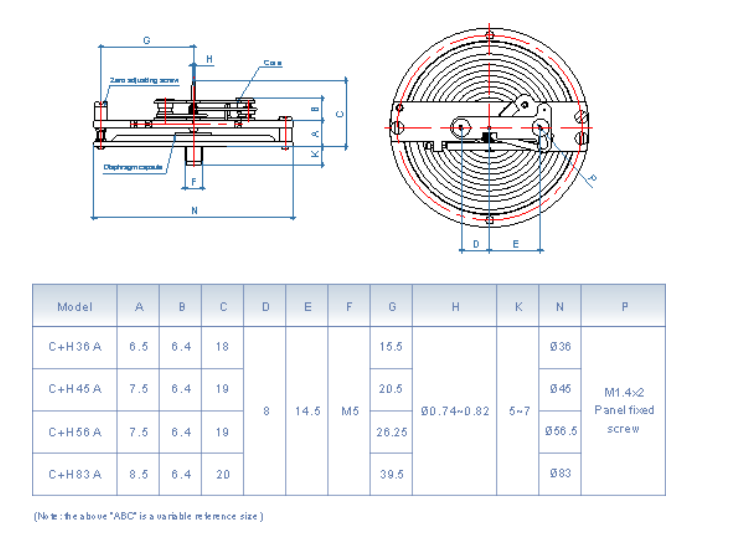
The construction of a typical tire pressure gauge, such as those available at Walmart, involves several materials and manufacturing processes. Analog gauges commonly utilize a Bourdon tube – a curved, flattened tube typically manufactured from spring steel (specifically, carbon steel with a high yield strength). This tube’s deformation under pressure is directly proportional to the pressure applied, and this movement is translated to a needle indicator via a linkage mechanism. The tube undergoes heat treatment processes (hardening and tempering) to achieve the desired elasticity and prevent permanent deformation. Digital gauges integrate a pressure sensor, often a piezoresistive silicon sensor. Silicon is chosen for its sensitivity to stress and its ability to be micro-machined to precise tolerances. Manufacturing involves semiconductor fabrication techniques, including diffusion, etching, and thin-film deposition. Housing materials for both analog and digital gauges are frequently ABS plastic (Acrylonitrile Butadiene Styrene) due to its impact resistance, rigidity, and cost-effectiveness. The gauge face (for analog gauges) is often made from PVC or polycarbonate for clarity and durability. Critical parameter control focuses on the calibration of the pressure sensing element, the precision of the mechanical linkages (analog), or the accuracy of the analog-to-digital converter (digital), and the sealing integrity of the housing to prevent environmental ingress (moisture, dust). Quality control involves rigorous testing against certified pressure standards.
Performance & Engineering
The performance of a tire pressure gauge is fundamentally governed by principles of fluid mechanics and material science. Force analysis centers on the pressure force exerted by the air within the tire acting on the sensing element (Bourdon tube or silicon diaphragm). The gauge is engineered to translate this force into a readable output – either a mechanical deflection or an electrical signal. Environmental resistance is a crucial consideration. Gauges are exposed to temperature fluctuations, humidity, and potential exposure to automotive fluids. ABS plastic housings are selected for their resistance to these elements. However, prolonged exposure to UV radiation can cause degradation of the plastic, potentially leading to cracking. Digital gauges are more susceptible to damage from moisture ingress if sealing is compromised. Compliance requirements involve adherence to standards set by organizations like the National Institute of Standards and Technology (NIST) for accuracy and traceability of calibration. Functional implementation relies on precise manufacturing tolerances and careful assembly to minimize hysteresis (the difference in readings depending on whether pressure is increasing or decreasing) and ensure repeatability. A key engineering challenge is minimizing the impact of temperature on gauge accuracy, as temperature changes can affect the elasticity of the Bourdon tube or the sensitivity of the silicon sensor.
Technical Specifications
| Parameter | Digital Gauge (Typical Walmart Offering) | Analog Stick Gauge (Typical Walmart Offering) | High-Precision Digital Gauge (Professional Grade) |
|---|---|---|---|
| Pressure Range | 0-60 PSI (0-414 kPa) | 0-60 PSI (0-414 kPa) | 0-150 PSI (0-1034 kPa) |
| Accuracy | ±0.5 PSI (±3.4 kPa) | ±2 PSI (±14 kPa) | ±0.1 PSI (±0.7 kPa) |
| Resolution | 0.1 PSI (0.7 kPa) | 1 PSI (7 kPa) | 0.01 PSI (0.07 kPa) |
| Operating Temperature | -10°C to 60°C (14°F to 140°F) | -20°C to 80°C (-4°F to 176°F) | -20°C to 60°C (-4°F to 140°F) |
| Power Source | CR2032 Battery | None | CR2032 Battery |
| Housing Material | ABS Plastic | ABS Plastic | Aluminum Alloy with Rubber Boot |
Failure Mode & Maintenance
Tire pressure gauges, particularly those commonly sold at Walmart, are susceptible to several failure modes. Analog gauges can experience fatigue cracking of the Bourdon tube due to repeated flexing, especially if subjected to overpressure. Calibration drift is common, resulting in inaccurate readings over time. This drift is often caused by temperature cycling or physical shock. Digital gauges are prone to failure of the pressure sensor (due to damage from overpressure or contamination), battery leakage causing corrosion of the electronics, and LCD screen failure. Delamination of the sensor diaphragm can also occur, particularly with cheaper sensors. Oxidation of the electrical contacts can lead to intermittent readings. Maintenance for analog gauges is limited to periodic calibration by a qualified technician. Digital gauges require battery replacement as needed and protection from moisture. Regular inspection of the housing for cracks or damage is essential. Avoid dropping the gauge, as this can damage the internal components. If a digital gauge consistently displays erratic readings, it’s likely the sensor has failed and the gauge should be replaced rather than repaired. For both types, avoid exceeding the maximum pressure rating.
Industry FAQ
Q: What is the significance of using the correct tire pressure, and how does an inaccurate gauge affect it?
A: Maintaining correct tire pressure optimizes fuel efficiency, enhances vehicle handling and braking performance, and prolongs tire lifespan. An inaccurate gauge—especially one consistently reading low—can lead to underinflation. Underinflation increases rolling resistance, reduces fuel economy, generates excessive heat (leading to tire failure), and compromises handling. Conversely, overinflation reduces ride comfort and can lead to uneven tire wear.
Q: How does temperature impact the accuracy of a tire pressure gauge?
A: Temperature changes affect both analog and digital gauges. In analog gauges, the elasticity of the Bourdon tube varies with temperature, causing calibration drift. In digital gauges, the sensitivity of the silicon sensor and the performance of the internal electronics can be temperature-dependent. Manufacturers often specify an operating temperature range, and accuracy is typically guaranteed only within that range.
Q: What is the difference between PSI and kPa, and can I use either unit interchangeably?
A: PSI (pounds per square inch) and kPa (kilopascals) are both units of pressure. 1 PSI is approximately equal to 6.895 kPa. Most gauges display readings in both units. While you can convert between the two, it’s crucial to use the units specified on the vehicle’s tire placard and ensure the gauge you’re using accurately displays both scales.
Q: How often should a tire pressure gauge be calibrated?
A: For professional applications (e.g., automotive repair shops), tire pressure gauges should be calibrated at least annually, or more frequently if subjected to heavy use or physical shock. For consumer use, periodic checks against a known accurate reference gauge are recommended, but formal calibration is generally not required unless consistently inaccurate readings are observed.
Q: What features distinguish a high-quality tire pressure gauge from a basic model?
A: Higher-quality gauges typically offer greater accuracy, higher resolution (e.g., displaying pressure to 0.01 PSI), a more robust housing (often made of metal), a digital display with backlight, and features like automatic shut-off to conserve battery life. They also undergo more stringent quality control and calibration procedures.
Conclusion
The tire pressure gauge, even in its most basic Walmart-sourced iteration, remains a vital tool for vehicle safety and maintenance. Its functionality relies on a delicate interplay of material science, engineering principles, and adherence to established standards. Understanding the limitations of low-cost gauges, particularly regarding accuracy and environmental sensitivity, is crucial for responsible tire maintenance. While digital gauges offer improved precision and convenience, both analog and digital models require periodic inspection and, when necessary, recalibration to ensure reliable performance.
The increasing emphasis on fuel efficiency and tire longevity will continue to drive demand for accurate and durable tire pressure gauges. Future developments may focus on integrating tire pressure monitoring systems (TPMS) directly into the gauge for enhanced accuracy and convenience, and the development of more resilient and temperature-stable sensing technologies. Proper utilization and understanding of these instruments are paramount for maximizing vehicle performance and ensuring driver safety.
 English
  Arabic
  China
China  China (Taiwan)
  Danish
  Dutch
Dutch  French
  German
  Greek
Greek  Hindi
Hindi  Indonesian
  Italian
  Japanese
  Korean
  Latin
Latin  Polish
  Portuguese
  Russian
  Spanish
  Turkish