
Apr . 01, 2024 17:55 Back to list
water pressure gauge home depot Performance Analysis
Introduction
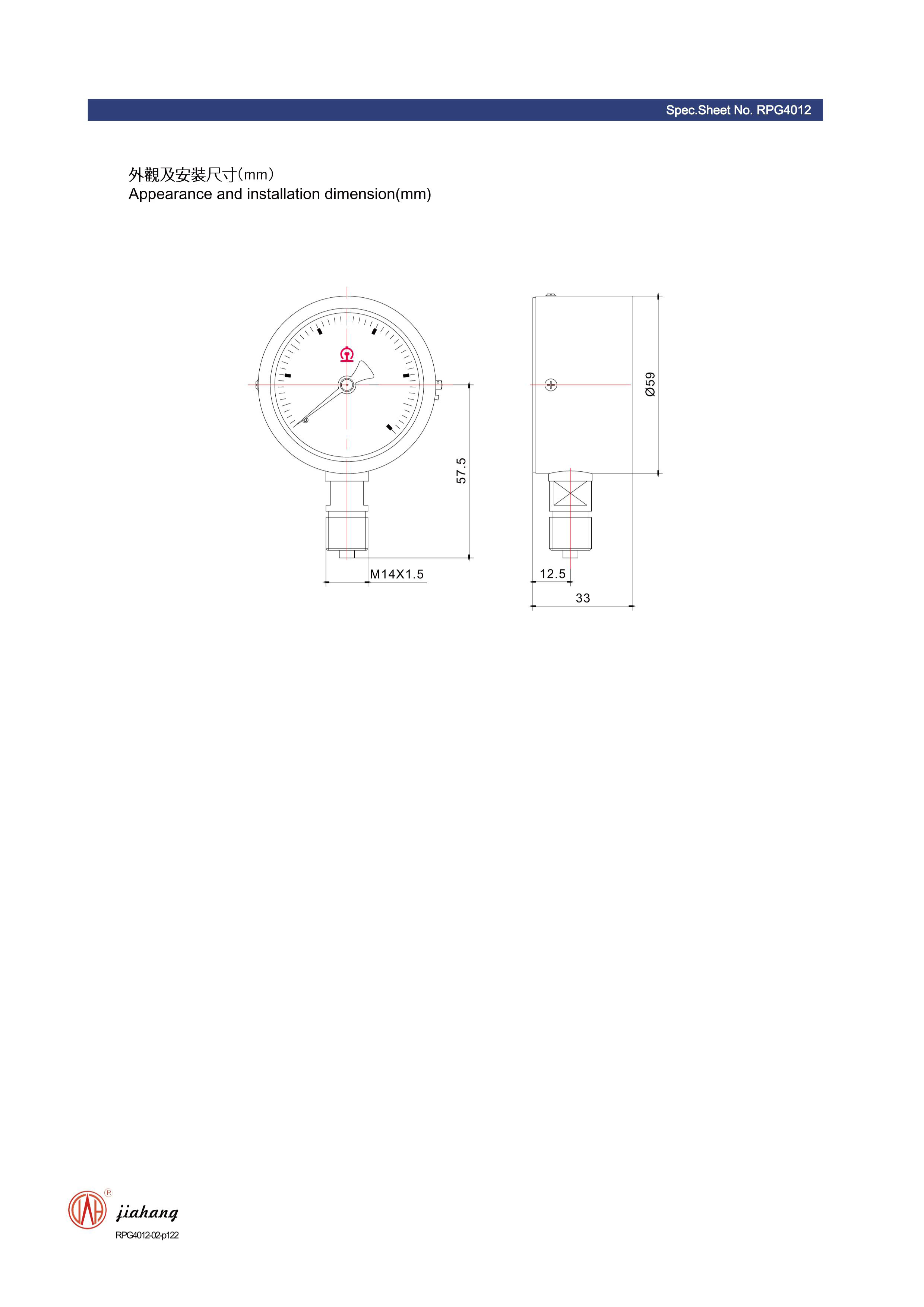
Water pressure gauges, commonly available at retailers like Home Depot, are critical instrumentation devices used to measure the static pressure exerted by a fluid – typically water – against a given surface. Their function extends beyond simple household monitoring; they are integral to protecting plumbing systems, optimizing water usage, and ensuring the efficient operation of industrial processes. These gauges operate on several principles, including Bourdon tube, diaphragm, and digital sensing technologies, each offering distinct advantages in accuracy, durability, and operational environment suitability. The core performance characteristics – accuracy, repeatability, and responsiveness – are paramount for reliable system monitoring. Within the broader industrial instrumentation landscape, water pressure gauges represent a foundational component, enabling proactive maintenance and preventing costly failures associated with overpressure or insufficient water supply. Their selection and application require a thorough understanding of pressure ranges, fluid compatibility, and environmental factors.
Material Science & Manufacturing
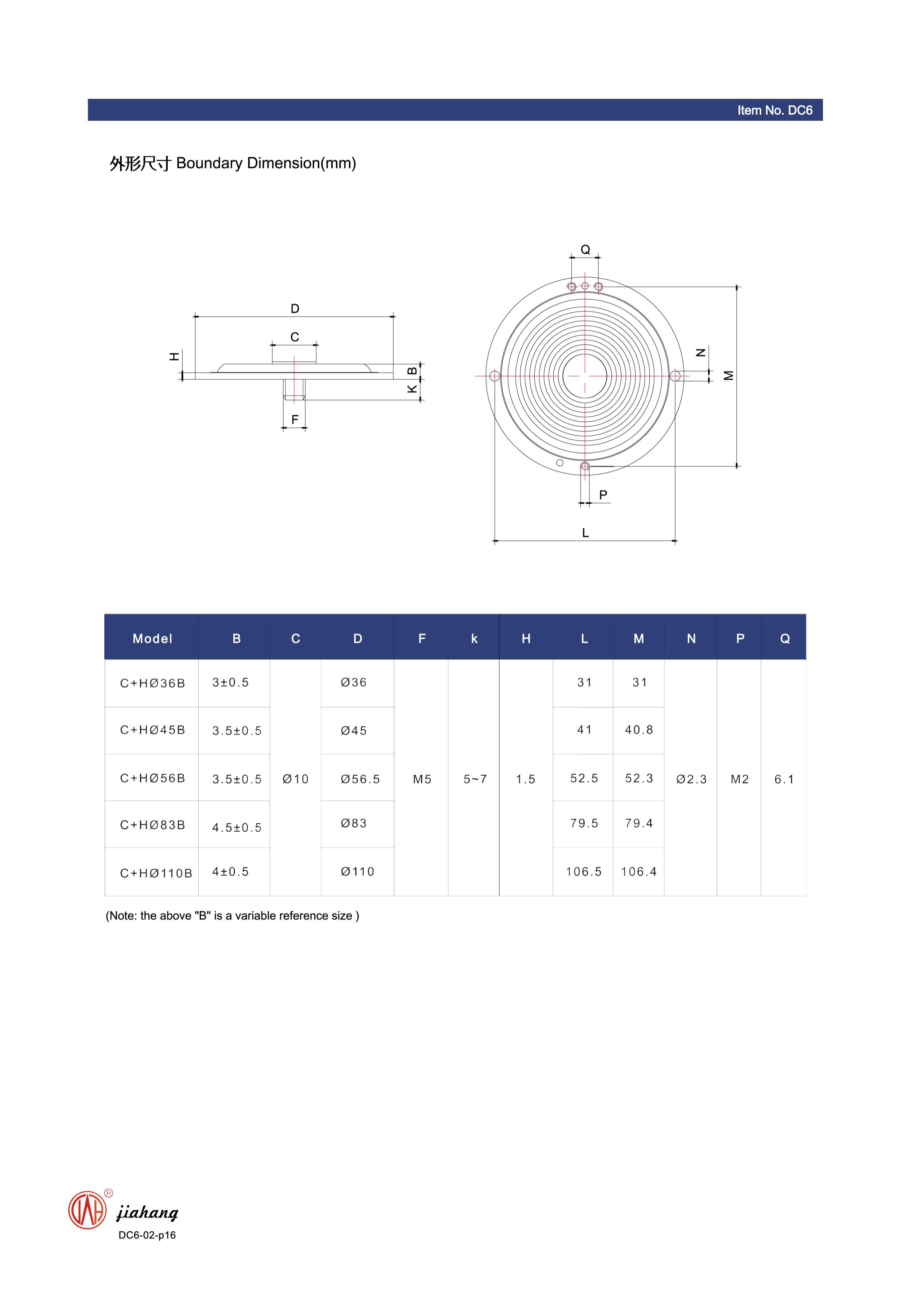
The construction of a typical water pressure gauge involves several key materials, each selected for its specific properties. The Bourdon tube, the primary sensing element in many gauges, is commonly manufactured from beryllium copper, phosphor bronze, or stainless steel (304 or 316). Beryllium copper offers high elasticity and corrosion resistance, while phosphor bronze provides excellent fatigue life. Stainless steel is preferred in corrosive environments. The gauge case is often constructed from steel, aluminum, or engineered plastics like ABS. Glass for the lens is typically tempered or acrylic for shatter resistance. Manufacturing processes begin with the forming of the Bourdon tube through a cold-drawing or hot-forming process. Precise annealing is crucial to relieve internal stresses and ensure accurate measurement. The gauge movement is assembled using hardened steel gears and pivots, requiring meticulous calibration. Liquid-filled gauges incorporate glycerin or silicone oil to dampen vibration and extend the gauge’s lifespan. Parameter control during manufacturing focuses heavily on dimensional accuracy of the Bourdon tube, ensuring a linear relationship between pressure and displacement. Welding processes, if utilized in stainless steel construction, require controlled atmosphere conditions to prevent oxidation and maintain material integrity. Surface treatments, such as passivation for stainless steel, further enhance corrosion resistance.
Performance & Engineering
The performance of a water pressure gauge is dictated by several engineering considerations. Force analysis centers around the stress experienced by the Bourdon tube under pressure. Hooke's Law governs the elastic deformation of the tube, relating stress to strain. Higher pressures necessitate thicker-walled tubes or materials with higher yield strengths. Environmental resistance is crucial; gauges exposed to outdoor conditions must withstand temperature fluctuations, humidity, and UV radiation. Liquid filling provides damping to mitigate the effects of pulsation and vibration, improving readability and preventing premature failure. Compliance requirements, such as those defined by the American Water Works Association (AWWA) or local plumbing codes, dictate the acceptable accuracy and safety standards. Functional implementation involves ensuring proper connection compatibility (NPT, BSPT, etc.) and selecting a suitable pressure range for the application. Gauge accuracy is typically expressed as a percentage of full scale (e.g., ±3% FS). Systematic errors, such as calibration drift, can be minimized through regular calibration against a known pressure standard. Hysteresis, the difference in readings between increasing and decreasing pressure, is another important performance characteristic.
Technical Specifications
| Pressure Range (PSI) | Accuracy (% FS) | Case Material | Connection Size (NPT) |
|---|---|---|---|
| 0-30 | ±3 | Steel | 1/8" |
| 0-60 | ±2 | Steel | 1/4" |
| 0-100 | ±2.5 | Stainless Steel | 1/4" |
| 0-200 | ±3 | Steel | 1/2" |
| 0-300 | ±3.5 | Steel | 1/2" |
| 0-500 | ±4 | Stainless Steel | 1/2" |
Failure Mode & Maintenance
Water pressure gauges are susceptible to several failure modes. Fatigue cracking of the Bourdon tube is a common issue, particularly in applications with significant pressure fluctuations. Corrosion, especially in environments with aggressive water chemistry, can lead to weakening and eventual rupture. Delamination of the Bourdon tube coating (if applicable) can compromise accuracy. Leakage of the filling fluid (in liquid-filled gauges) reduces damping and accelerates corrosion. Oxidation of internal components, particularly in steel gauges, can cause seizing and inaccurate readings. Maintenance involves regular visual inspection for signs of damage or corrosion. Calibration should be performed annually, or more frequently in critical applications. If the gauge is subjected to water hammer or sudden pressure surges, it should be inspected for deformation. For gauges exhibiting erratic readings or signs of leakage, replacement is generally recommended rather than repair. Proper installation, ensuring adequate support and minimizing vibration, is crucial for extending gauge lifespan. Periodic cleaning with a mild detergent can remove surface contaminants and prevent corrosion.
Industry FAQ
Q: What is the difference between a dry and a liquid-filled pressure gauge, and when should I use each?
A: Dry gauges are suitable for applications with minimal vibration and pulsation. They are generally less expensive. Liquid-filled gauges (glycerin or silicone) are used in applications with significant vibration, pulsation, or shock. The liquid dampens the movement, protecting the internal components and providing a more stable reading. Liquid filling also lubricates moving parts, extending the gauge's life.
Q: How do I determine the correct pressure range for my application?
A: Select a gauge with a range that encompasses the normal operating pressure, plus a safety margin. Avoid selecting a gauge with a range that is too large, as this will reduce accuracy. The maximum pressure should not exceed 80% of the gauge’s full scale.
Q: What does "accuracy" as a percentage of full scale (% FS) mean?
A: Accuracy (% FS) indicates the maximum error that can be expected when measuring any pressure within the gauge’s range. For example, a gauge with ±2% FS accuracy could have a reading that is off by up to 2% of the full scale value.
Q: What materials are best suited for corrosive environments?
A: For highly corrosive environments, gauges with stainless steel (316) Bourdon tubes, cases, and connections are recommended. Certain plastics, like PTFE, can also be used for wetted parts to provide excellent chemical resistance.
Q: How often should a pressure gauge be calibrated?
A: A typical calibration interval is one year. However, in critical applications or environments with high vibration or temperature fluctuations, more frequent calibration (e.g., every six months) may be necessary. Calibration should also be performed after any significant shock or impact.
Conclusion
Water pressure gauges, readily available through retailers like Home Depot, are foundational instruments in fluid power monitoring. Their accurate operation relies on a complex interplay of material science, precise manufacturing processes, and diligent adherence to industry standards. Selecting the appropriate gauge – considering pressure range, material compatibility, and environmental conditions – is paramount for ensuring reliable performance and preventing costly system failures. Understanding the common failure modes and implementing a proactive maintenance schedule are crucial for maximizing gauge lifespan and maintaining system integrity.
Looking ahead, advancements in digital pressure sensing technology will likely lead to increased accuracy, connectivity, and remote monitoring capabilities. The integration of smart features, such as self-calibration and predictive maintenance algorithms, will further enhance the value proposition of these instruments. Continued research into materials and coatings will focus on improving corrosion resistance and extending gauge lifespan in harsh environments. Maintaining a consistent focus on quality control throughout the manufacturing process will remain essential for delivering reliable and accurate pressure measurements.
 English
  Arabic
  China
China  China (Taiwan)
  Danish
  Dutch
Dutch  French
  German
  Greek
Greek  Hindi
Hindi  Indonesian
  Italian
  Japanese
  Korean
  Latin
Latin  Polish
  Portuguese
  Russian
  Spanish
  Turkish