
Apr . 01, 2024 17:55 Back to list
well pump pressure gauge Performance Engineering
Introduction
The well pump pressure gauge is a critical component in water well systems, providing a visual indication of the water pressure delivered by the pump. Positioned within the industry chain between the submersible or jet pump and the distribution network (homes, irrigation systems, etc.), its primary function is to monitor and display the pressure of the fluid being pumped, typically measured in pounds per square inch (PSI) or kilopascals (kPa). Core performance characteristics include accuracy, responsiveness, durability in corrosive environments, and the ability to withstand pressure pulsations inherent in pumping systems. Failure to accurately monitor pressure can lead to inefficient pump operation, premature wear and tear, and potential damage to downstream plumbing and appliances. This guide provides an in-depth technical overview of well pump pressure gauges, encompassing material science, manufacturing processes, performance engineering, failure modes, and relevant industry standards.
Material Science & Manufacturing
Well pump pressure gauges are typically constructed using a combination of materials selected for their mechanical strength, corrosion resistance, and compatibility with potable water. The Bourdon tube, the core sensing element, is commonly manufactured from beryllium copper or stainless steel (304 or 316) due to their high elasticity and resistance to corrosion. Beryllium copper offers superior spring characteristics but requires careful handling during manufacturing and is more costly. Stainless steel provides excellent corrosion resistance, particularly in aggressive water conditions. The gauge case is frequently constructed from steel, often with a protective coating such as epoxy or powder coating to prevent rust. The window, protecting the dial, is typically made of tempered glass or polycarbonate for impact resistance. The internal mechanisms, including gears and linkages, are usually constructed from brass or stainless steel. Manufacturing processes involve deep drawing for the Bourdon tube, precision machining for the movement, and assembly under controlled conditions to ensure accuracy. Parameter control during Bourdon tube formation is critical; heat treatment processes must be precisely managed to achieve the desired spring properties. Welding (for stainless steel components) requires skilled operators and adherence to strict quality control procedures to prevent porosity and ensure structural integrity. Calibration is performed using certified pressure standards, and each gauge undergoes rigorous testing to verify accuracy across its specified range.
Performance & Engineering
The performance of a well pump pressure gauge hinges on its ability to accurately translate fluid pressure into a readable indication. Force analysis centers on the stress distribution within the Bourdon tube as it deflects under pressure. The tube's geometry (ovalness, wall thickness) is engineered to provide a linear relationship between pressure and displacement. Environmental resistance is paramount; gauges must withstand temperature fluctuations, humidity, and potential exposure to corrosive elements in the well water (e.g., chlorides, sulfates, iron bacteria). Material selection plays a crucial role in ensuring long-term reliability. Compliance requirements depend on the intended application. For potable water systems, gauges must meet NSF/ANSI 61 standards to ensure materials do not leach harmful contaminants into the water supply. The gauge's design must also consider pressure pulsations caused by the pump; damping mechanisms (e.g., glycerine-filled cases) are often employed to minimize needle flutter and provide a stable reading. Engineering considerations also include the gauge’s response time – the speed at which the needle reacts to changes in pressure – and its hysteresis (the difference in readings when approaching a specific pressure from above versus below). Long-term exposure to high pressures can cause plastic deformation of the Bourdon tube, leading to drift in calibration. Proper venting of the gauge is essential to prevent pressure build-up within the case due to temperature changes.
Technical Specifications
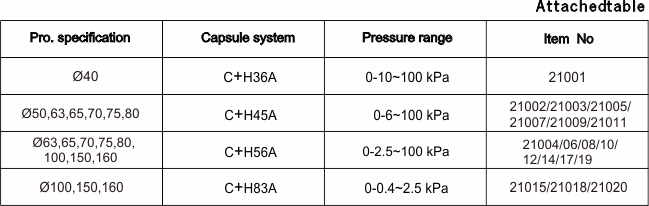
| Parameter | Typical Range | Accuracy | Connection Size |
|---|---|---|---|
| Pressure Range | 0-100 PSI, 0-300 PSI, 0-600 PSI | ±2% of Full Scale | 1/4" NPT (Female) |
| Case Material | Steel with Epoxy Coating | Operating Temperature | -40°F to 150°F (-40°C to 66°C) |
| Bourdon Tube Material | Stainless Steel 304/316 or Beryllium Copper | Window Material | Tempered Glass or Polycarbonate |
| Connection Material | Brass or Stainless Steel | Dial Size | 2", 2.5", 4" |
| Process Compatibility | Potable Water, Corrosive Liquids (with appropriate material selection) | Mounting | Bottom Mount, Back Mount, Front Mount |
| Certifications | NSF/ANSI 61 (for potable water applications) | Damping | Liquid Filled (Glycerine, Silicone) or Dry |
Failure Mode & Maintenance
Common failure modes in well pump pressure gauges include Bourdon tube rupture due to overpressure, corrosion leading to leaks, gear train failure due to wear and tear, and window breakage. Fatigue cracking in the Bourdon tube can occur due to prolonged exposure to pressure pulsations. Delamination of the protective coating on the case can lead to rust and corrosion of the underlying steel. Oxidation of internal components, particularly brass gears, can cause increased friction and inaccurate readings. Failure analysis often reveals that improper installation (e.g., excessive tightening of fittings, exposure to direct sunlight) and inadequate maintenance are contributing factors. Preventive maintenance includes periodic visual inspection for leaks, corrosion, and damage. Regular calibration (at least annually) is recommended to ensure accuracy. If a gauge exhibits erratic readings or fails to respond to pressure changes, it should be removed and replaced. To extend the gauge’s lifespan, consider installing a pressure snubber upstream to dampen pressure surges. Avoid subjecting the gauge to extreme temperatures or corrosive environments whenever possible. For gauges used with corrosive fluids, select a model constructed from corrosion-resistant materials (e.g., 316 stainless steel) and consider using a diaphragm seal to isolate the gauge from the process fluid. Properly cleaning the gauge with a mild detergent and water can remove dirt and debris that may interfere with its operation.
Industry FAQ
Q: What is the significance of accuracy specification (e.g., ±2% of full scale) in a pressure gauge?
A: The accuracy specification indicates the maximum permissible error in the gauge’s reading. ±2% of full scale means that the actual pressure reading can deviate from the true pressure by up to 2% of the gauge’s maximum pressure range. For example, on a 100 PSI gauge, the reading could be off by ±2 PSI. Choosing a gauge with higher accuracy is crucial for applications where precise pressure monitoring is essential, such as optimizing pump performance and preventing system failures.
Q: How do liquid-filled gauges improve performance compared to dry gauges?
A: Liquid-filled gauges (typically glycerine or silicone) dampen the effects of pressure pulsations and vibrations, resulting in a more stable and readable indication. The liquid also lubricates internal moving parts, reducing wear and tear and extending the gauge’s lifespan. Dry gauges are susceptible to needle flutter and may experience premature failure in applications with significant vibration.
Q: What material is best suited for a pressure gauge exposed to highly corrosive well water?
A: For highly corrosive environments, a pressure gauge with a 316 stainless steel Bourdon tube, case, and connection is highly recommended. 316 stainless steel offers superior resistance to chloride attack and other corrosive agents commonly found in well water. Consider a PTFE-lined or diaphragm seal to further isolate the gauge from the corrosive fluid.
Q: What is the impact of water hammer on a pressure gauge, and how can it be mitigated?
A: Water hammer, caused by sudden changes in flow velocity, generates high-pressure surges that can damage the Bourdon tube and other internal components of the pressure gauge. Mitigation strategies include installing a pressure snubber or surge suppressor upstream of the gauge to dampen the pressure spikes, ensuring proper pipe sizing to reduce flow velocity, and using slow-closing valves.
Q: How often should a well pump pressure gauge be calibrated?
A: A well pump pressure gauge should be calibrated at least annually, or more frequently if exposed to harsh conditions or used in critical applications. Regular calibration ensures that the gauge maintains its accuracy and provides reliable pressure readings, preventing potential system failures and optimizing pump performance.
Conclusion
The well pump pressure gauge remains an indispensable component in water well systems, offering a direct and reliable means of monitoring pressure. Understanding the underlying material science, manufacturing processes, and performance characteristics is critical for selecting a gauge that meets the specific demands of the application. Proper installation, regular maintenance, and adherence to relevant industry standards are essential for ensuring long-term accuracy, reliability, and safe operation.
The continued development of pressure gauge technology is focused on improving accuracy, durability, and resistance to harsh environments. Advancements in sensor technology and materials science are paving the way for more sophisticated and reliable pressure monitoring solutions. Future gauges may incorporate digital displays, wireless communication capabilities, and self-diagnostic features to enhance usability and facilitate remote monitoring.
 English
  Arabic
  China
China  China (Taiwan)
  Danish
  Dutch
Dutch  French
  German
  Greek
Greek  Hindi
Hindi  Indonesian
  Italian
  Japanese
  Korean
  Latin
Latin  Polish
  Portuguese
  Russian
  Spanish
  Turkish