
Apr . 01, 2024 17:55 Back to list
well water pressure gauge Performance Analysis
Introduction
Well water pressure gauges are critical components in residential, agricultural, and industrial water systems utilizing groundwater sources. These instruments measure the static and dynamic pressure exerted by the water column within a well, providing essential data for system monitoring, pump control, and overall water resource management. Unlike pressure measurement in municipal water supplies which are typically constant, well water pressure fluctuates significantly based on well recharge rates, pump activity, and demand. Consequently, the gauge must provide accurate, reliable readings across a broad pressure range, and be constructed with materials compatible with the often corrosive nature of well water. This guide provides an in-depth examination of well water pressure gauge technology, encompassing material science, manufacturing processes, performance characteristics, potential failure modes, and relevant industry standards. Understanding these aspects is crucial for procurement professionals, maintenance engineers, and system designers seeking to optimize well water system performance and longevity.
Material Science & Manufacturing
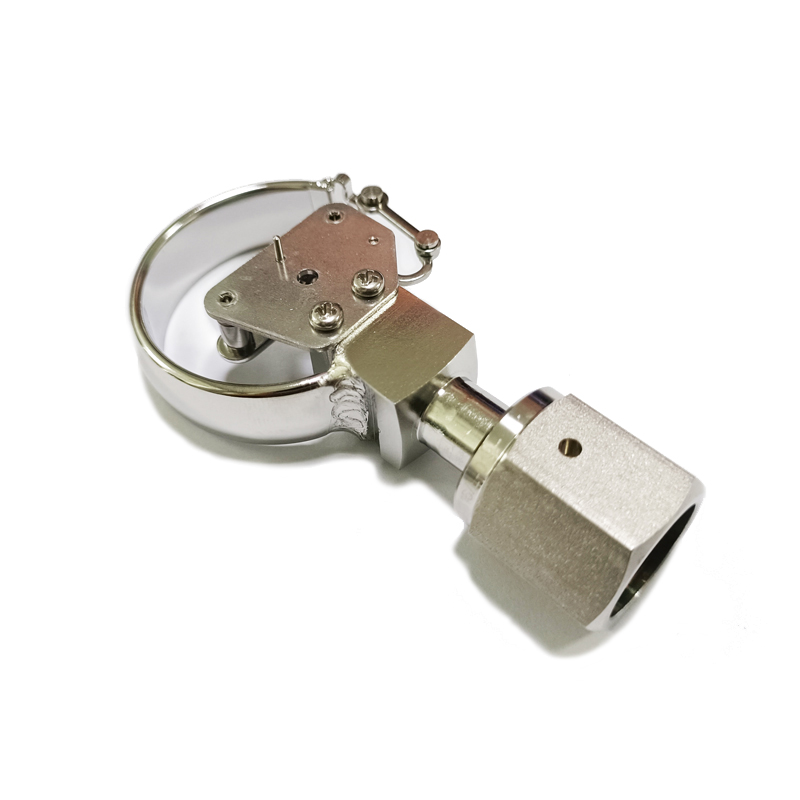
The construction of a typical well water pressure gauge involves several key materials, each selected for specific properties. The Bourdon tube, the core pressure-sensing element, is commonly fabricated from copper alloys such as beryllium copper or phosphor bronze, chosen for their high elasticity, corrosion resistance, and ability to undergo repeated cyclic stress without failure. The gauge case is frequently constructed from stainless steel (304 or 316) or a reinforced thermoplastic, providing mechanical protection and resistance to environmental factors. The gauge face is typically made from polycarbonate or acrylic, offering clarity and impact resistance. The movement mechanism relies on precision gears cut from steel alloys, often hardened for durability. The connection fitting, which interfaces with the well system, is typically brass or stainless steel. Manufacturing begins with forming the Bourdon tube through a bending and annealing process, ensuring accurate elliptical or helical curvature. This is followed by heat treatment to achieve desired spring characteristics. The movement is assembled with meticulous attention to gear alignment and calibration. The case is then fabricated, often through stamping or machining, and the internal components are installed. Critical parameter control during manufacturing includes dimensional accuracy of the Bourdon tube, gear mesh tolerances, and leak testing to ensure reliable operation. Special attention is paid to cleaning and passivation of stainless steel components to maximize corrosion resistance. The sealing compound used within the case must be compatible with the internal materials and the potential presence of glycol or other water treatment chemicals.
Performance & Engineering
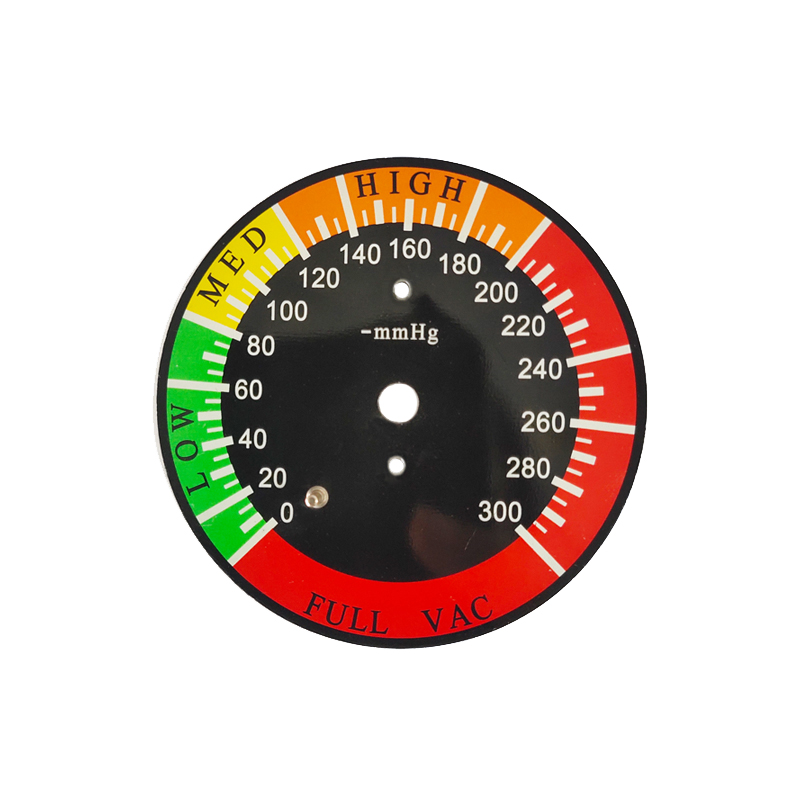
Well water pressure gauge performance is governed by several engineering principles. The Bourdon tube operates on the principle of converting pressure into mechanical displacement. As pressure increases, the tube tends to straighten, and this movement is amplified through a series of gears to drive the indicator needle. Accuracy is paramount, and is typically specified as a percentage of full-scale deflection (e.g., ±2%). Hysteresis, the difference in readings between increasing and decreasing pressure, should be minimized. The gauge must also exhibit good linearity, meaning the needle displacement is directly proportional to the applied pressure across the entire range. Environmental resistance is a critical factor, particularly in outdoor installations. Gauges must withstand temperature fluctuations, humidity, and potential exposure to UV radiation. Vibration is another concern, as it can cause inaccurate readings or premature wear of the movement mechanism. Liquid-filled gauges (glycerin or silicone oil) are commonly employed to dampen vibration and improve readability. Compliance requirements vary by region, but generally involve pressure safety standards and material certifications. The gauge’s maximum operating pressure should exceed the maximum expected well pressure, with a suitable safety factor. Force analysis of the Bourdon tube is crucial during the design phase to ensure it can withstand repeated pressure cycles without yielding or fracturing. Corrosion resistance is particularly important given the potential presence of dissolved minerals, hydrogen sulfide, and other corrosive agents in well water.
Technical Specifications
| Parameter | Typical Value (Residential Gauge) | Typical Value (Industrial Gauge) | Units |
|---|---|---|---|
| Pressure Range | 0-100 psi | 0-300 psi | psi |
| Accuracy | ±3% of full scale | ±1% of full scale | % |
| Case Material | Stainless Steel/Thermoplastic | Stainless Steel | - |
| Bourdon Tube Material | Copper Alloy (Beryllium Copper) | Copper Alloy (Phosphor Bronze) | - |
| Connection Size | 1/4” NPT | 1/2” NPT | - |
| Operating Temperature | -40°F to 140°F | -20°F to 180°F | °F |
Failure Mode & Maintenance
Common failure modes in well water pressure gauges include Bourdon tube rupture due to overpressure or fatigue cracking, leakage through the case seals due to deterioration of elastomers, and sticking or binding of the movement mechanism due to corrosion or debris. Bourdon tube rupture typically occurs when the gauge is subjected to pressures exceeding its rated limit, or due to repeated cyclical loading exceeding its fatigue strength. Leakage is often caused by degradation of the O-rings or gaskets within the case, exacerbated by exposure to UV radiation or harsh chemicals. Movement mechanism failure can stem from corrosion of the gears, accumulation of sediment or scale, or lubrication breakdown. Preventative maintenance is crucial for maximizing gauge lifespan. Regular visual inspection for leaks, damage, or corrosion is recommended. Periodically "tapping" the gauge can help dislodge any sticking movement components. If the gauge is exposed to corrosive water, consider using a gauge with a corrosion-resistant Bourdon tube material (e.g., Monel) or installing a sediment filter upstream of the gauge. Calibration should be performed annually or as needed to ensure accuracy. If a gauge exhibits persistent inaccuracies or leaks, it should be replaced. Proper installation, avoiding excessive vibration and direct sunlight, also contributes to prolonged service life. Debris buildup in the well system can lead to erratic readings; a robust well filtration system mitigates this risk.
Industry FAQ
Q: What is the impact of water hammer on pressure gauge accuracy and longevity?
A: Water hammer, a pressure surge caused by sudden changes in flow velocity, can significantly impact pressure gauge accuracy and lifespan. The sudden pressure spike can exceed the gauge’s calibration range, potentially damaging the Bourdon tube and internal mechanism. Repeated water hammer events induce fatigue stress, accelerating failure. Mitigation strategies include installing a water hammer arrestor upstream of the gauge and ensuring proper pipe support to minimize vibration.
Q: How does water quality (e.g., pH, mineral content) affect the choice of gauge materials?
A: Water quality is a primary consideration in material selection. Low pH (acidic water) can accelerate corrosion of brass and steel components. High mineral content can lead to scale buildup, hindering movement mechanism function. The presence of hydrogen sulfide (H2S) causes sulfide stress cracking in some metals. In aggressive water environments, stainless steel (316) or Monel Bourdon tubes and cases are recommended. Consideration of the water's chemical composition is crucial for maximizing gauge longevity.
Q: What are the advantages of liquid-filled pressure gauges in well water applications?
A: Liquid-filled gauges, typically glycerin or silicone oil, offer several advantages in well water systems. The liquid dampens vibration caused by pump cycling, leading to more stable readings. It also lubricates internal components, reducing wear and tear. The liquid prevents corrosion of internal parts, extending gauge lifespan. Finally, it improves readability by cushioning the needle movement.
Q: What is the difference between gauge pressure and absolute pressure measurement in a well system?
A: Gauge pressure measures pressure relative to atmospheric pressure, while absolute pressure measures pressure relative to a perfect vacuum. Well water pressure gauges typically measure gauge pressure. To convert gauge pressure to absolute pressure, atmospheric pressure must be added. This distinction is important for certain calculations related to well depth and pump performance.
Q: How often should a well water pressure gauge be calibrated or replaced?
A: A well water pressure gauge should be calibrated annually, or more frequently if subjected to significant vibration or corrosive conditions. Replacement is necessary if the gauge exhibits consistent inaccuracies, leaks, or physical damage. A general rule of thumb is to replace gauges every 5-7 years, even if they appear to be functioning correctly, to ensure continued reliability and accurate readings.
Conclusion
Well water pressure gauges are indispensable tools for monitoring and controlling groundwater-based water systems. Their accurate and reliable performance hinges on a complex interplay of material science, precision manufacturing, and careful consideration of operational conditions. Selecting a gauge with appropriate materials, pressure range, and features like liquid filling, based on the specific characteristics of the well water and system requirements, is critical for maximizing longevity and minimizing maintenance. Understanding potential failure modes and implementing preventative maintenance practices further ensures consistent and dependable operation.
Future advancements in well water pressure gauge technology may include the integration of digital sensors, wireless communication capabilities for remote monitoring, and self-diagnostic features to proactively identify potential issues. As water resource management becomes increasingly important, the role of accurate and reliable pressure measurement will continue to grow, driving innovation in this essential component of well water systems.
 English
  Arabic
  China
China  China (Taiwan)
  Danish
  Dutch
Dutch  French
  German
  Greek
Greek  Hindi
Hindi  Indonesian
  Italian
  Japanese
  Korean
  Latin
Latin  Polish
  Portuguese
  Russian
  Spanish
  Turkish