
Apr . 01, 2024 17:55 Back to list
white face black pointer 2 inch 0100 oil pressure gauge Performance Analysis
Introduction
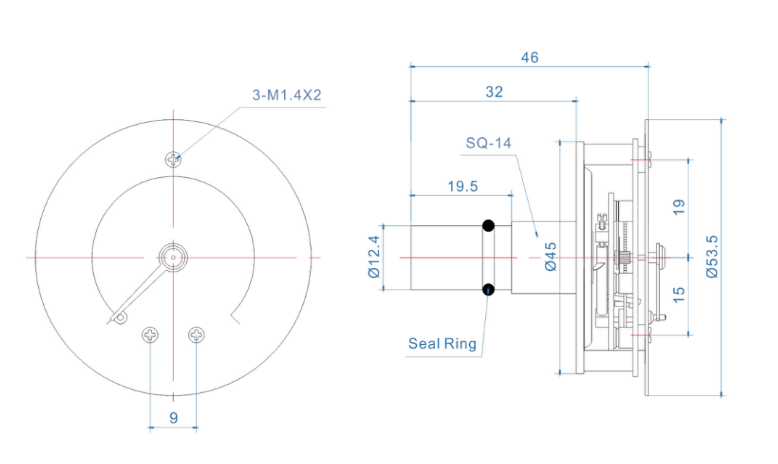
The white face black pointer 2 inch 0-100 oil pressure gauge is a critical instrument utilized in a wide range of industrial and automotive applications for the precise measurement and display of oil pressure within a system. Positioned within the broader framework of pressure instrumentation, these gauges serve as essential components in monitoring the health and performance of machinery. They occupy a key position in preventative maintenance strategies, providing operators with real-time data indicative of lubrication system functionality and potential impending failures. Core performance characteristics are defined by accuracy, repeatability, response time, and the ability to withstand harsh operating environments. The gauge’s design, employing a Bourdon tube mechanism and damped movement, provides a visually clear and reliable indication of pressure, crucial for optimizing equipment lifespan and preventing catastrophic events.
Material Science & Manufacturing
The construction of a white face black pointer 2 inch 0-100 oil pressure gauge relies on a specific selection of materials designed for durability and compatibility with various oil types. The Bourdon tube, the core sensing element, is typically manufactured from alloys like beryllium copper or phosphor bronze. Beryllium copper is favored for its high tensile strength and excellent corrosion resistance. Phosphor bronze offers good fatigue life and elasticity. The case is commonly constructed from stainless steel (304 or 316) due to its resistance to corrosion and mechanical stress. The window, critical for visibility, is often made from tempered glass or acrylic, selected for impact resistance and clarity. The pointer is typically constructed from a lightweight alloy, often aluminum, for low inertia and quick response.
Manufacturing involves several key processes. The Bourdon tube is formed through a bending process, precisely shaping the alloy into a curved tube. Heat treatment is then applied to achieve the desired spring characteristics. The internal mechanism, including the gears and linkage, is typically manufactured through precision stamping and assembly. The dial face is produced using printing techniques, ensuring accurate calibration markings. Assembly requires careful alignment and calibration to guarantee accuracy. A crucial parameter control during manufacturing is maintaining tight tolerances on the Bourdon tube dimensions, ensuring linearity and minimizing hysteresis. Leak testing is also vital to verify the integrity of the pressure-containing components.
Performance & Engineering
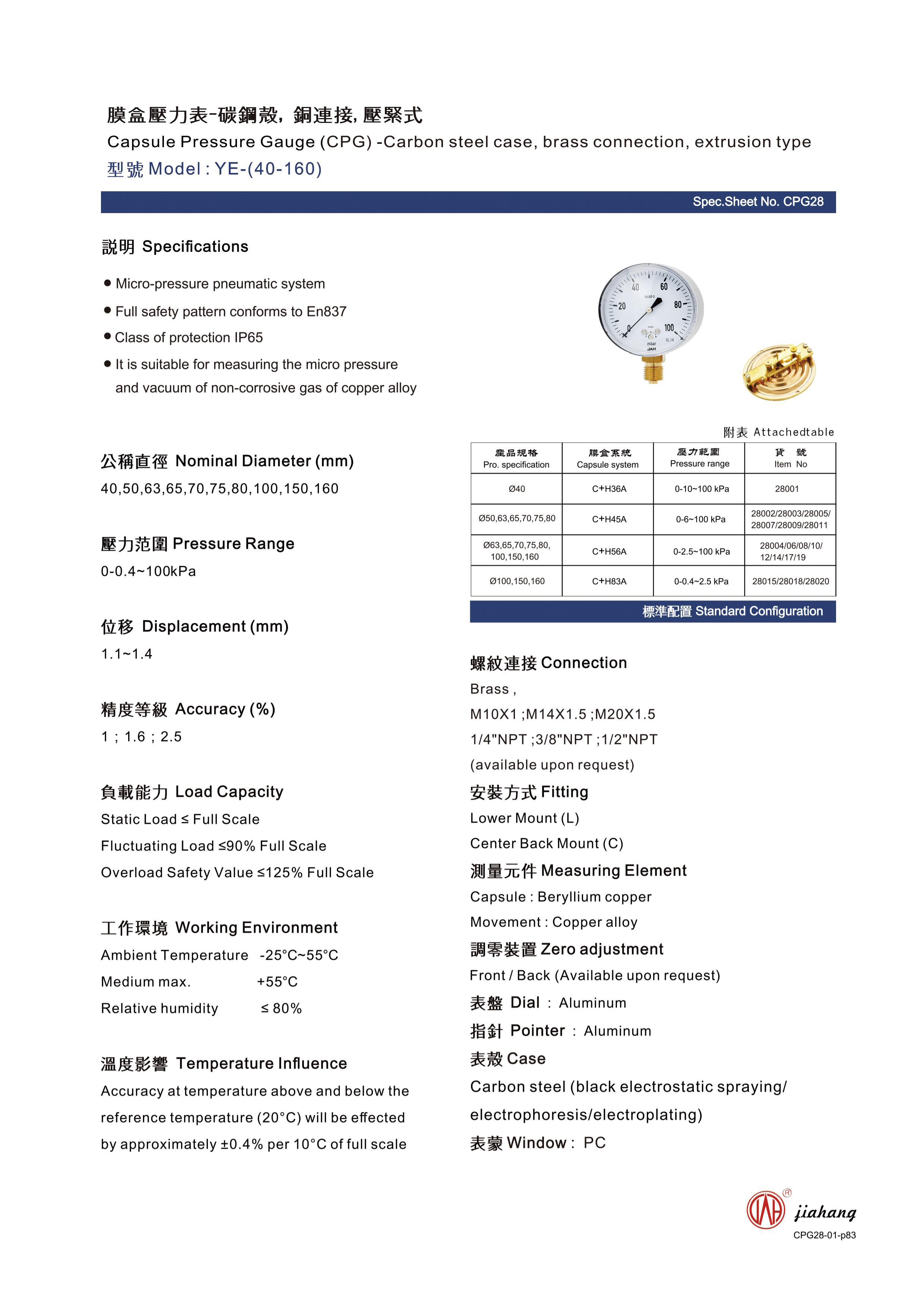
The performance of the oil pressure gauge is fundamentally governed by the principles of elastic deformation. When oil pressure is applied, the Bourdon tube attempts to straighten, exerting force on a mechanical linkage connected to the pointer. The magnitude of the deflection is directly proportional to the applied pressure, following Hooke’s Law within the elastic limit of the material. Engineering considerations include minimizing hysteresis – the difference in readings between increasing and decreasing pressure – through precise material selection and manufacturing tolerances. Damping, typically achieved through a fluid-filled chamber, is employed to reduce pointer oscillation and provide a stable reading. Environmental resistance is crucial; gauges must withstand temperature fluctuations, vibration, and exposure to various fluids without compromising accuracy. Compliance requirements dictate adherence to specific standards for accuracy classes (e.g., Class 1.0, Class 1.6) and safety features like case pressure resistance to prevent rupture in case of Bourdon tube failure. The gauge’s 0-100 PSI range necessitates careful selection of the Bourdon tube material and dimensions to accommodate the expected pressure levels without exceeding the elastic limit, ensuring reliable long-term operation.
Technical Specifications
| Parameter | Specification | Testing Method | Tolerance |
|---|---|---|---|
| Pressure Range | 0-100 PSI | Calibrated Pressure Tester | ±1.6% of full scale |
| Case Material | Stainless Steel (304) | Material Certification | ASTM A240 |
| Bourdon Tube Material | Phosphor Bronze | Chemical Analysis | Copper 85%, Tin 15% |
| Window Material | Tempered Glass | Impact Resistance Test | Meets ANSI Z97.1 |
| Accuracy Class | 1.6 | Comparative Testing | Complies with EN 837-1 |
| Operating Temperature | -40°C to 85°C | Temperature Cycling Test | ±2% per 10°C deviation |
Failure Mode & Maintenance
Common failure modes in white face black pointer oil pressure gauges include Bourdon tube rupture due to overpressure, linkage fatigue leading to inaccurate readings, and window cracking from impact. Bourdon tube rupture often results from exceeding the specified pressure limit, exacerbated by corrosion or material defects. Linkage fatigue manifests as erratic pointer movement or complete failure of the pointer to respond to pressure changes. Window cracking typically occurs due to physical impact or thermal shock. Another frequent issue is the freezing or sticking of the movement mechanism due to lubricant degradation or contamination. Corrosion, particularly in harsh environments, can lead to gradual deterioration of the Bourdon tube and case, resulting in leaks or inaccurate readings.
Preventative maintenance involves regular visual inspection for physical damage, leak testing to ensure pressure integrity, and periodic calibration against a certified pressure standard. Lubrication of the movement mechanism with a suitable instrument oil is crucial for smooth operation. Protecting the gauge from excessive vibration and temperature fluctuations can extend its lifespan. In cases of suspected internal damage, disassembly and component replacement by a qualified technician are necessary. Avoid using abrasive cleaners on the window, as they can cause scratching and reduce visibility. Proper storage in a dry environment when not in use is also vital to prevent corrosion.
Industry FAQ
Q: What is the typical lifespan of a 2-inch oil pressure gauge under normal operating conditions?
A: Under typical operating conditions – consistent pressure within the specified range, moderate temperature fluctuations, and minimal vibration – a well-maintained 2-inch oil pressure gauge can have a lifespan of 5-10 years. However, lifespan can be significantly reduced by exposure to harsh environments, overpressure events, or lack of preventative maintenance.
Q: How does temperature affect the accuracy of the gauge?
A: Temperature affects accuracy through thermal expansion and contraction of the Bourdon tube and other internal components. Significant temperature variations can cause deviations in the reading. High-quality gauges are designed to minimize these effects, but calibration may be required if the gauge is subjected to extreme temperature fluctuations.
Q: What level of vibration can this gauge withstand without compromising accuracy?
A: The gauge is typically designed to withstand moderate levels of vibration commonly found in industrial settings. However, prolonged exposure to high-frequency or high-amplitude vibration can lead to fatigue failure of the internal mechanism and inaccurate readings. Vibration dampening mounts are recommended in high-vibration environments.
Q: Is this gauge suitable for use with corrosive fluids?
A: While the stainless steel case offers good corrosion resistance, prolonged exposure to highly corrosive fluids can still cause damage to the Bourdon tube and internal components. For applications involving corrosive fluids, gauges with specialized corrosion-resistant Bourdon tube materials (e.g., Hastelloy) are recommended.
Q: What is the process for calibrating this oil pressure gauge?
A: Calibration involves comparing the gauge’s reading against a certified pressure standard across its entire operating range. This is typically performed using a calibrated pressure tester. Adjustments are made to the internal linkage to ensure the gauge meets the specified accuracy class. Calibration should be performed annually or after any significant impact or exposure to extreme conditions.
Conclusion
The white face black pointer 2 inch 0-100 oil pressure gauge remains a vital component in numerous industrial and automotive applications, providing critical data for monitoring system health and preventing failures. Its accuracy and reliability are predicated on careful material selection, precise manufacturing processes, and adherence to relevant industry standards. Understanding the potential failure modes and implementing a robust preventative maintenance program are essential for maximizing the gauge's lifespan and ensuring accurate pressure readings.
Future advancements in oil pressure gauge technology are likely to focus on digitalization, incorporating sensors and wireless communication capabilities for remote monitoring and data logging. Integration with predictive maintenance systems will enable proactive identification of potential issues, further enhancing equipment reliability and reducing downtime. Continued refinement of material science and manufacturing techniques will drive improvements in accuracy, durability, and resistance to harsh operating environments.
 English
  Arabic
  China
China  China (Taiwan)
  Danish
  Dutch
Dutch  French
  German
  Greek
Greek  Hindi
Hindi  Indonesian
  Italian
  Japanese
  Korean
  Latin
Latin  Polish
  Portuguese
  Russian
  Spanish
  Turkish