
Apr . 01, 2024 17:55 Back to list
wika pressure gauge Manufacturing Analysis
Introduction
WIKA pressure gauges represent a critical component in process instrumentation, serving as local indicators of system pressure across a broad spectrum of industrial applications. Positioned within the industrial chain between sensor technology and process control systems, WIKA gauges translate pressure variations into readily interpretable visual data. These gauges are essential for monitoring, control, and safety functions in industries including oil and gas, chemical processing, power generation, and HVAC. Core performance characteristics include accuracy, reliability, repeatability, and resistance to corrosive media and harsh environmental conditions. Their functionality extends beyond simple pressure indication, often incorporating features like limit switches for alarm activation and pulsation dampening for enhanced readability. Selecting the correct WIKA pressure gauge requires careful consideration of the process media, pressure range, operating temperature, and desired accuracy, directly impacting the overall efficiency and safety of the operation.
Material Science & Manufacturing
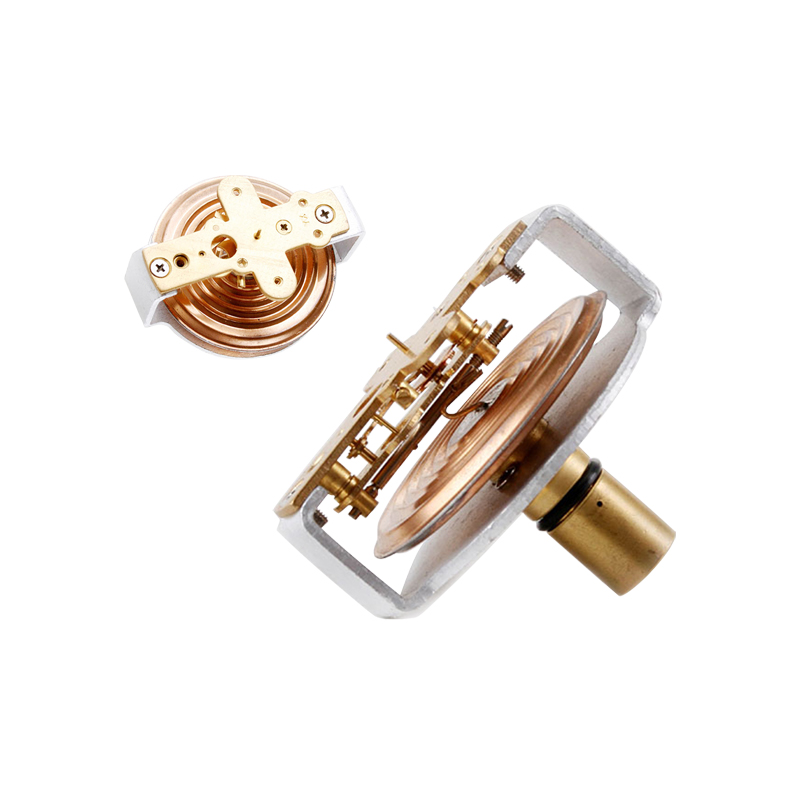
WIKA pressure gauge construction leverages a range of materials selected for their specific properties relating to pressure containment, corrosion resistance, and mechanical strength. Bourdon tubes, the core sensing element, are commonly manufactured from beryllium copper alloys (CuBe) due to their high elastic limit and fatigue resistance. Stainless steels, such as 316L and 304, are frequently used for cases, connections, and internal components exposed to corrosive environments. The gauge's window material is typically glass, often tempered or laminated for safety, or polycarbonate for increased impact resistance. Manufacturing processes vary depending on the gauge type. Bourdon tube production involves forming a flattened, coiled tube through precision bending and heat treatment to impart the necessary elastic characteristics. Welding, primarily TIG (Tungsten Inert Gas) welding, is employed for joining components, ensuring a leak-tight seal. Cases are typically deep-drawn or machined from stainless steel. Critical parameters include material traceability, weld quality control (including radiographic inspection and pressure testing), and dimensional accuracy of the Bourdon tube. Surface treatments, such as passivation for stainless steel, are applied to enhance corrosion resistance. Calibration is performed using NIST traceable standards and automated calibration rigs to guarantee accuracy across the specified pressure range. The manufacturing environment is controlled for particulate matter to prevent contamination and ensure consistent performance.
Performance & Engineering
The performance of a WIKA pressure gauge is governed by principles of elasticity, fluid mechanics, and material science. The Bourdon tube, when subjected to internal pressure, undergoes a deflection proportional to the applied pressure. This deflection is mechanically linked to a pointer, providing the pressure reading. Force analysis involves evaluating the stresses within the Bourdon tube material to ensure it remains within its elastic limit. Environmental resistance is a critical engineering consideration; gauges must withstand temperature fluctuations, vibration, shock, and exposure to corrosive media. Compliance with standards like IEC 61326-2-3 for EMC (Electromagnetic Compatibility) and EN 837-1 for accuracy class are vital. For applications involving pulsating pressure, a dampened movement mechanism is employed to minimize pointer oscillation and improve readability. This often involves a viscous fluid filling the gauge case. Design considerations include selection of appropriate case materials to contain the process fluid in case of Bourdon tube rupture (safety features). Safety relief devices, such as blow-out discs or back panels, can also be incorporated. Furthermore, pressure gauges are often integrated with digital transmitters to provide remote monitoring and control capabilities, necessitating careful engineering of signal conditioning and data transmission protocols. Life cycle analysis is also critical, determining expected service life under specific operating conditions, and incorporating preventative maintenance schedules.
Technical Specifications
| Parameter | Unit | Typical Value (Model 212.50) | Accuracy Class |
|---|---|---|---|
| Pressure Range | bar | 0 – 600 | 1.6 |
| Accuracy | % of span | ±1.0 | 1.0 |
| Operating Temperature | °C | -20 to +80 | -40 to +60 (Optional) |
| Process Connection | G 1/2 B | NPT 1/2" (Optional) | |
| Case Material | Stainless Steel 304 | Plastic (ABS) | |
| Bourdon Tube Material | Copper Alloy | Stainless Steel 316L (Optional) |
Failure Mode & Maintenance
WIKA pressure gauges, while robust, are susceptible to various failure modes. Fatigue cracking of the Bourdon tube is a common issue, particularly in applications with significant pressure pulsations or vibrations. This is initiated by cyclical stress exceeding the material's endurance limit. Drift in accuracy can occur due to temperature fluctuations, creep in the Bourdon tube material, or wear in the movement mechanism. Corrosion, particularly in harsh chemical environments, can lead to leakage or complete failure of the gauge. Delamination of the Bourdon tube coating (if applicable) can also compromise accuracy. Oxidation of internal components can impede movement. Maintenance typically involves periodic visual inspection for leaks, damage to the case or window, and verification of accuracy against a calibrated standard. Recalibration should be performed annually or more frequently in critical applications. For gauges exposed to corrosive media, regular cleaning and inspection for signs of corrosion are essential. If pulsations are present, ensure the pulsation dampener is functioning correctly. Avoid overpressure conditions, as these can permanently damage the Bourdon tube. In case of a damaged window, replace it with an equivalent part. Proper handling and storage are crucial to prevent mechanical damage. For digital gauges with transmitters, check the power supply and communication signals periodically.
Industry FAQ
Q: What is the impact of process fluid temperature on gauge accuracy?
A: Process fluid temperature significantly impacts gauge accuracy. Temperature fluctuations cause expansion or contraction of the Bourdon tube, leading to drift in the reading. WIKA gauges are typically calibrated at a specific temperature (e.g., 20°C). Significant deviations from this temperature require temperature compensation, either through the selection of gauges with temperature compensation features or by applying correction factors to the reading. High temperatures can also accelerate corrosion and material degradation.
Q: How do I select the correct pressure range for my application?
A: Selecting the correct pressure range is critical. The ideal range should encompass the typical operating pressure with a margin for fluctuations, but should not exceed the gauge's maximum rated pressure. Operating at the extreme end of the pressure range reduces accuracy and shortens the gauge's lifespan. A general rule is to select a range where the normal operating pressure falls within 25% to 75% of the full scale.
Q: What does ‘Accuracy Class’ mean, and why is it important?
A: Accuracy class, specified according to EN 837-1, defines the permissible error as a percentage of the full-scale value. Lower accuracy classes (e.g., 1.0) indicate higher accuracy, meaning the error is smaller. The required accuracy class depends on the application's criticality. For critical control applications, a higher accuracy class is essential. For general indication, a lower accuracy class may suffice.
Q: Can WIKA gauges be used with highly viscous fluids?
A: Using WIKA gauges with highly viscous fluids can present challenges. Viscous fluids can cause sluggish response and dampen the movement, affecting accuracy. They may also clog the Bourdon tube. Specialized gauges with modified Bourdon tube designs and flushing connections may be necessary for viscous applications. Regular cleaning and inspection are crucial.
Q: What is the role of liquid filling in a pressure gauge?
A: Liquid filling serves multiple purposes. It dampens the effects of pressure pulsations and vibrations, improving readability and extending the gauge's lifespan. It also lubricates the movement, reducing wear. Furthermore, it protects internal components from corrosion and condensation. The type of filling fluid (e.g., glycerin, silicone oil) is selected based on the process fluid compatibility and operating temperature range.
Conclusion
WIKA pressure gauges are essential instrumentation components, bridging the gap between process variables and operator visibility. Their performance relies heavily on material selection, precise manufacturing processes, and adherence to stringent industry standards. Understanding the underlying principles of pressure sensing, potential failure modes, and appropriate maintenance procedures is crucial for ensuring reliable and accurate operation.
Selecting the correct WIKA gauge for a specific application necessitates a comprehensive assessment of process conditions, accuracy requirements, and environmental factors. Continued advancements in sensor technology and materials science are driving innovations in pressure gauge design, leading to improved performance, increased durability, and enhanced safety features. Proper integration, coupled with preventative maintenance, maximizes the gauge’s lifespan and optimizes process control effectiveness.
 English
  Arabic
  China
China  China (Taiwan)
  Danish
  Dutch
Dutch  French
  German
  Greek
Greek  Hindi
Hindi  Indonesian
  Italian
  Japanese
  Korean
  Latin
Latin  Polish
  Portuguese
  Russian
  Spanish
  Turkish